Wednesday, May 28, 2014

What's Your Treatment Plan?

Over the past few months, we have discussed a variety of weight management programs. Most of us have done or are doing OPTIFAST currently. Most of us have done a variety of other plans, i.e., TQI (which isn't really a weight management program, but offers very sound nutritional advice), Weight Watchers, etc. We've talked about creating hybrids of various programs.

We've discussed weight loss surgery.

And we've hammered home the need for exercise as part of a weight management program.

We've discussed obstacles which may stand in our way - including:
  • busy lives
  • grief
  • boredom
  • our own perfectionism
  • our own lack of self care (taking care of other people's needs when we can't get ourselves on our own to-do list!)
  • resentment
  • depression
  • protection/insulation
  • need for comfort or soothing, etc.
So how are we doing? Most of us recognize that left to our own devices, we tend to lose track and gain weight. If we're holding steady, that's certainly not bad!

But many of us express frustration about not keeping weight off as effectively as we'd hoped.

I've always maintained that most of us are - or should be - our own best doctors. Yes, I've heard the line, "A doctor who treats himsef has a fool for a patient!"

But we usually do know ourselves reasonably well.
So, knowing yourself as you do, what is your current recommendation for your own treatment plan? Think about it; write it up. Shore up your resolve.

We're all in this together.
Linda Gromko, MD

Wednesday, May 21, 2014

Week 18: When Your Life is in the Blender!

How many of us have had the experience where big, life-changing events were happening all at once? Where nothing seemed to "flow" with order or reason? Where, in spite of our best intentions, things were simply out of our control? Life...in the blender - and on HIGH!

In our last group meeting, many of us were in the midst of blenderized living. We had deaths in the family, critical medical experiences in family members, dealing with elderly parents, and planning for surgeries. Not "light" content.

And, what do we do when life is in the blender? Many of us turn to our long-term comforts of carbohydrates, chocolate, salty-crunchy snacks - understandably putting aside what we know we need, and finding some respite in the midst of the storm.


So, we struggle again. Wondering why it is that we succeed in so many areas of our lives, yet falter with food.

We've talked in our group about "running the bases." ("When I'm running the bases, I'm in the game.")

Let's review:
  • The pitcher = what life throws at you
  • The bat = how you react
  • lst base = intention and attitude
  • 2nd base = habits and behaviors
  • 3rd base = self-care ("self-basting")
  • Home base = reassessment, improvements in health & life.
This week as we reel from the fast pitch, check your intentions and attitudes. What behaviors are serving you, and what behaviors are hampering your progress? And what are you doing to take care of yourself?

Go back and review the Serenity Prayer. What things can we control and change, and what is simply life in the blender?

Sort it out, and we'll get through it.

We're all in this together.
Linda Gromko, MD
 

Wednesday, May 14, 2014

Practical Question: How does one plan for surgery?

It looks like a couple of our members are having surgeries in the near future. So last week's discussion centered on preparing for a surgery.

Everyone's circumstances vary, of course. But the following are pointers from my own personal and clinical observations that might help you someday.

  • If you have the "luxury" of a scheduled surgery, rather than an emergency surgery, pick a date that serves you and your loved ones best.
  • Ask your surgeon, "What can I do to ensure the best recovery possible?"
  • Think and plan ahead. Pay your bills, do your laundry, clean your house - or hire someone to help you. Come home to a clean, ordered living space.
  • Ask about post-operative foods. You may be advised to eat more protein, for example. 
  • Constipation is a common problem for people who require post-operative narcotics. Increase your fluid intake and eat fresh fruits and vegetables to prevent constipation. 
  • Simple, easy-to-prepare meals will be helpful. There's nothing wrong with prepared foods, but do check your labels for sodum, calories, and protein.

  • If you use a sleep apnea device, i.e., CPAP, ask when you shoud start using it post-op. Remember that narcotics can worsen sleep apnea - temporarily, of course.
  • Blood clots in your lower extremities can be life-threatening. Prevent them by getting up and moving around; at least, wiggle your toes!
  • Ask your surgeon about mobility - and mobility assistance. Depending on your surgery, you might benefit from a rolling walker or cane during your early recovery. These can be selected by a physical therapist and often delivered to your home.
  • Make sure you have your regular medications - and any special post-op medications available. Prepare a "medi-set" ahead of time.
  • Expect to feel overly stimulated when you make a trip to the pharmacy or grocery store - even overwelmed! It will pass. Plan on making no more than one out-of-house excursion per day in the early post-op period.
  • It's normal to feel more tired, so take naps and allow yourself to rest.

  • Taking deep breaths and coughing can actually prevent a pneumonia. Ask your nurse how to "splint,"i.e., how to support your incision by pressing a pillow against yourself.
  • Concerned about bathing and shampooing? Rinseless shampoo can be purchased on-line or in a beauty supply store.
  • When it's time to go back to work, consider returning on a Thursday or Friday. That way, you can go for a shorter time and have the weekend to recover.
  • If you're going back to work for partial days, be sure to rest in the morning and go to work in the afternoon. If you start your workday in the morning, you'll never get away!
  • Post-op blues or depression aren't uncommon, but ask your doctor if depression lingers.
  • If you will be limited in mobility for more than a couple of weeks, ask your doctor for a temporary disability parking permit.
Be sure to ask your questions. There are no stupid questions - except, perhaps, for the ones you don't ask!

Remember, we're all in this together.
Linda Gromko,MD

Wednesday, April 30, 2014

Most People in Japan are Slender!

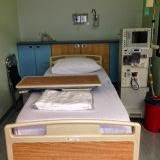
I just came back from the trip of a lifetime: a week in Japan, sponsored by the Japanese Society for Home Hemodialysis. I gave three talks. The first was for the Conference of the Japanese Society for Home Hemodialysis in Shizuoka. The second, for a group of young nephrologists at Kyoto University, and the third was for the staff of the Sakai Rumi Clinic in Kobe, Japan.

Linda with a Group of Young Nephrologists at
the Golden Temple in Kyoto, Japan
My first observation - arriving at the Tokyo Airport (Narita), and heading for Shizuoka by way of the Shinkansen ("bullet train") was, "These people really move!" They walk with purpose; the trains are never late.


The food was fabulous. I ate sashimi (raw fish) for the first time, though I doubt it will become a regular part of my diet. The tempura was extraordinary. Normally, I don't have eye contact with my food as I did with the little tempura'd fish. And I did eat a tiny squid! I thought it was a baby, but was reassured that it was a full-grown adult.

The food was fresh, beautiful, and quite filling. Dessert? One night, it was a scoop of sesame ice cream the size of a golf ball. Another night, fresh melon with three perfect fresh strawberries.

So, all along, we've been stressing exercise and portion control. The Japanese people I met had it all figured out.

Remember, we're all in this together.
Linda Gromko, MD

Wednesday, April 9, 2014

Week 15: A Grain of Grace

Last week was one of those weeks where we had a little tiny group of two! Traffic, other commitments, who knows?

But it led to an interesting discussion and one which is very appropriate for the group as a whole.

We were discussing various problems we'd encountered; she had a history of abuse from a very young age. It seemed like she had triumphed against horrific odds, becoming the happy and well-adjusted woman she is today.

 
Sometimes when people are asked, "how did you possibly get through all that?" we hear the answer, "you just do. You do what you have to."
 
 
But in reality, not everyone does get through a challenging life unscathed. Some people tune out. Some people suicide. Some drink or use drugs. Some people "check out" of life, never accomplishing  much - even though they are still living.
 
 
So I asked my compadre, "Why do you think you made it through?" Clearly, others in her dysfunctional family hadn't fared as well.
 

"There were little bits of grace: grains of grace," she said. "There would be the right person to help when I needed help. And I made it through."
 
I would submit that we have all experienced grains of grace: talking with the right person at the right minute, maybe finding the book we needed to read. Perhaps an art exhibit or a symphony performance allowed us to see the expansive universe beyond our own distressing sphere - just enough to give us enough hope to get us to the next level.
 
We'll be talking about this a bit more.
 
Take care; we're all in this together.
 
Linda Gromko, MD

Saturday, March 29, 2014

Week 14: A Tame Little Exorcism is a Start!

Here is the exercise we did last week, having named a variety of our collective and personal demons:

"We hypothesize that there are "demons" that prevent us from maintaining a healthy weight. Pick a demon from the blog (last week's entry) that applies to you - even in a minor way.

Now, write a brief note to that demon, and explain to it what - if any - function it might have served for you at one time. You may even wish to express your gratitude for that service. Most importantly, explain to your demon why you would like it to go away now, and forever."


Here are a few of our Demon Letters:
 
"Dear Demon of Positive Strokes Through Food,
Go away. I have enjoyed the positive strokes. They felt good. But go away. I've got enough other - and better - sources of positive strokes."
 
and another:
 
"In the past, resentment gave me the illusion of power in a situation where I was unsafe and, in actuality, powerless. It was safe to feel resentment - no one could see the feeling. And I could feel at least somewhat powerful and in control by acknowleging the strong feeling, but not acting on it. I wanted to do many things to punish my abuser but was strong enough not to destroy my future by acting on those impulses. It was an appropriate coping mechanism - given my realities then.
 
"Resentment no longer serves me well - I am safe and powerful and can take care of myself. I can say out loud what needs to be said. I have the freedom to make the choices I want - positive or negative. I no longer have to define myself in terms of opposition to someone else."
 
Here's another:
 
Food as a demon:
"Dear Food:
On one hand I want to exorcise you - at the same time, I need you. The beauty of OPTIFAST was that I could, in many ways, exorcise myself from food - knowing that only program "food" was allowed. In many ways, that was a tremendous relief.
 
"But food...real food (not the highly processed and refined and chemically altered junk food I am so often attracted to)...I want to think of you not as a demon, but as a friend. Someone who can be my partner in good health.
 
"If I could partner with whole foods and exorcise refined junk foods, that would be a gift."
 
And finally,
 
"Dear Demon,
You - the arbitor of correct function and academic excellence - assisted me in the pursuit of scholastic achievement and even getting into professional school. But the perfectionism you required and the continual criticism and comparisons between me and other people have decreased the enjoyment of my life, and limited my sense of self worth. While I recognize that perfectionism occasionally has its place, you are no longer relevant in my life.
 
"Therefore, I thank you for any service you may have provided, and require that you leave my life now and forever."
 
Interesting thoughts!
 
One group member commented that she could have written a letter to nearly every demon on last week's list. By all means, do that!
 
As a personal note, I'm always interested in the way we sigh briefly when assigned an exercise, and then write like mad! Kind of telling, I think. We've got stuff to say.
 
Remember, we're all in this together.
Take care,
 
Linda Gromko, MD

Wednesday, March 26, 2014

Week 13: Naming the Demons Before We Exorcise Them

As usual, we had an animated session last week. Our challenge was to give examples of "demons" that prevent people from maintaining a healthy weight. Here's a short list - see if any apply to you:
  • A personal history of sexual assault
  • A personal history of parental neglect
  • Stress
  • Fear of failure
  • Dealing - or rather, not dealing - with gender dysphoria ("If I'm heavy, I can't transition")
  • Need for comfort
  • Shame - never feeling good enough
    • never a good enough mother
    • never a good enough parther
    • never fit enough
    • never consistent enough
    • never committed enough
    • never thin enough
  • Criticism and judgment
  • Fear of being personally rejected ("It's easier to be rejected because I'm heavy than to be rejected because of who I am.")
  • Low self esteem
  • Depression
  • Having been truly hungry as a child
  • Having been bullied/taunted when younger
  • Loss of friends, family, partner from any means
  • Addiction - personal or in family of origin
  • Frustration with the pace of desired change
  • Resentment of other people who appear to have it better.

One commonality among demons is that we feel the need to be protected from them - to be insulated from the pain they cause. Sometimes, that protection - in the form of food - served us well for a while.

A young woman in literal danger of sexual assault might think she'd be less at risk if overweight. And perhaps her overweight really did serve her at one time - just not now.

A transgender teen might see transitioning to the correct gender as being impossible. Extra weight might protect him/her from "going there," - a process which seems so difficult as to be just a dream. Later, the extra weight doesn't serve, and the gender issues remain.

We also discussed the way food itself can become a demon. Always everywhere, food beacons. It's there at every celebration, every lonely moment. It's our addiction, our requirement, our ever-present reward. But this "demon" is necessary for us to live - provided the demon is managed. 

We also discussed that food is manufactured in such a way as to be purpsefully addictive, i.e., laden with carbohydrates and refined sugar that keeps us coming back for more - even when we don't even want it!

In tomorrow's group, we'll be inviting some of our demons to leave!
Should be interesting.

Remember, we're all in this together.
Linda Gromko, MD